

Energy storage — planned system development
Thanks to declining investment costs and modular, stackable architectures, energy storage is now a system solution that can be built up incrementally.
The goal is not an oversized initial setup, but the creation of a structure tailored to operational needs that can be expanded later.
When is energy storage warranted?
Energy storage offers a real advantage when production and consumption are separated in time, when the grid environment is constrained, or when operational reliability is a key consideration. In such cases, storage can provide genuine operational flexibility.
However, not every system requires battery supplementation. As with every development, the justification should be evaluated based on the specific site's technical characteristics, consumption structure, and future plans.
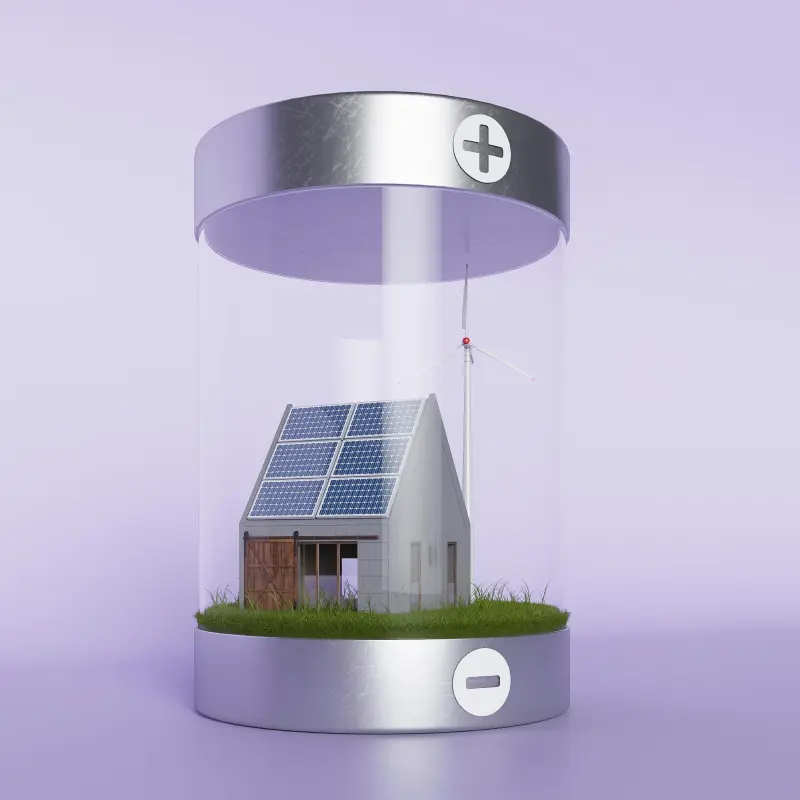
DC and AC coupled systems — architectural differences
Energy storage can be implemented in two fundamental architectures: DC and AC coupled configurations.
In a DC coupled system, the battery is connected directly to a hybrid inverter, operating as an integrated system. The types of batteries that can be connected and the extent of expandability depend on the configuration supported by the inverter manufacturer.
In an AC coupled system, the storage unit operates as an independent unit with its own power management. It can be integrated with existing — even older — inverter systems, and is typically used in higher-capacity configurations, most often with built-in protection solutions.
The choice depends in every case on the size, infrastructure, and expansion requirements of the given system.

The physical characteristics of the energy storage system
When comparing energy storage systems, it is not sufficient to examine nominal capacity alone. The deliverable power output and the system's operating mode are equally decisive.
In DC coupled systems, the storage unit aligns with the inverter architecture, so the capacity and power possibilities conform to the technical framework of the given hybrid inverter. In AC coupled solutions, the output of the solar system and the storage capacity can be configured independently of each other, providing greater design flexibility.
From an operational perspective, a key question is whether the system is capable of automatically islanding from the grid in the event of a power outage and continuing to operate, or whether manual intervention is required. The most advanced solutions provide uninterrupted switchover, where required by the operation of running machinery.
Selecting the appropriate configuration depends on the alignment of system size, consumption structure, and operational reliability requirements.
System assessment before selecting an energy storage solution
Inverter architecture and compatibility
Does DC or AC coupling provide a more optimal fit for the given system?